
Keep reuse in the hands of the communities that built it.
California’s new textile recycling law has the right goals. But it gives one organization control over who may collect, where, and on what terms. The Muwekma Ohlone Tribe is asking the Legislature for targeted amendments so that Tribal programs and small, independent collectors are protected, not pushed out.
Muwekma Ohlone dancers. Published with the permission of the Muwekma Ohlone Tribe.
What SB 707 does.
In September 2024, California enacted the Responsible Textile Recovery Act. It makes the companies that make and sell clothing and household textiles responsible for what happens to those products when we are done with them.2
The law’s stated intent is to “emphasize repair and reuse” and to minimize environmental-justice impacts §42984.05. The Tribe and GEF support those goals. Our concern is how the system is built.
- One organization runs the system. Every covered producer must join a single statewide producer responsibility organization (PRO). CalRecycle approved Landbell USA in February 2026, and no second PRO can be approved until after 2035. §42984.45
- The PRO writes the plan, including the rules every collector must follow and where collection sites go. §42984.10
- Producer fees pay for it. Brands pay the PRO, and the PRO pays for collection, hauling, grants and incentives. §§42984.13–.14
- CalRecycle oversees it. Regulations take effect no earlier than July 1, 2028, and a plan must be approved by July 1, 2030. §§42984.2, 42984.8
One gatekeeper for every bin in California.
In the Tribe’s words, the law “concentrates operational control in a single PRO without adequate safeguards for existing smaller-scale and sovereign operators.”1
The PRO decides who counts.
An “authorized collector” is only someone who has signed an agreement with the PRO §42984.3(b). The PRO approves, sets rules for and can terminate collection sites §42984.7. Per the memo, centralized contracting and density requirements “favor large commercial operators able to meet scale and reporting demands.”1
Independents get undercut.
The plan supplies containers, signage and hauling to its sites at no cost §42984.10(e), across a network of at least 10 sites per county or one per 25,000 residents §42984.10(d). Independent collectors “risk being excluded from the formal network, losing access to material flows, or being undercut by PRO-subsidized sites.”1
The money flows through one door.
Producer fees, incentive payments and grants are all distributed by the PRO §§42984.10(f), 42984.13, and the law sets no compensation standard for collectors. Operators outside the network “have limited ability to capture the new revenue stream.”1
The metrics may not favor reuse.
The PRO proposes its own performance standards until 2032 §§42984.10(c), 42984.19. The Tribe warns that metrics and fees “are likely to prioritize volume and recyclability metrics that disadvantage smaller, reuse-oriented programs.”1
GEF’s viewWho is positioned to win?
In GEF’s view, a centralized system favors whoever already runs large statewide networks. The bill’s sponsor said the program “would use California’s network of thrift and secondhand businesses.”6 Goodwill’s California council publicly backed the bill and said it looked forward to working with its sponsors.7 Reporting on Landbell USA’s selection said thrift organizations like Goodwill and The Salvation Army “will be ‘integral’ to the plan” and “financially supported.”8 The Salvation Army has said the law positions it “as a key partner for many major brands.”9
These are worthy organizations, and our founders have worked alongside them.11 But a system with one gatekeeper and no safeguards will, over time, reward scale. Small independent collectors and Tribal programs have no guaranteed place in it.
A law that never mentions Tribes.
“SB 707 contains no recognition of Tribal sovereignty, no inventory requirement for existing Tribal programs, no non-displacement protections, and no mechanism requiring the PRO to partner with Tribal governments.”1 The law guarantees local governments a right to join the collection network, but Tribes are not included in its definition of “local jurisdiction” §§42984.7(b), 42984.3(m).
As a result, the Tribe warns, Tribal programs “can be regulated out of independent existence or relegated to the margins of a commercial system they do not control.”1
SB 707 creates an important framework for textile recovery, but its current architecture risks sidelining the very reuse-oriented and community-based operators that best advance the law’s stated goals.Muwekma Ohlone Tribe of the San Francisco BayMemorandum to the Senate Committee on Environmental Quality, August 12, 20261
The people who built textile reuse in California.
- Small and independent collectors. Family businesses, local nonprofits and bin operators who have collected textiles for years at their own expense. Under SB 707, they keep a role only if the PRO signs them.
- California Native American Tribes. Many Tribes run collection and reuse “as part of land stewardship, cultural continuity, economic development, and environmental management on or near ancestral territories.”1
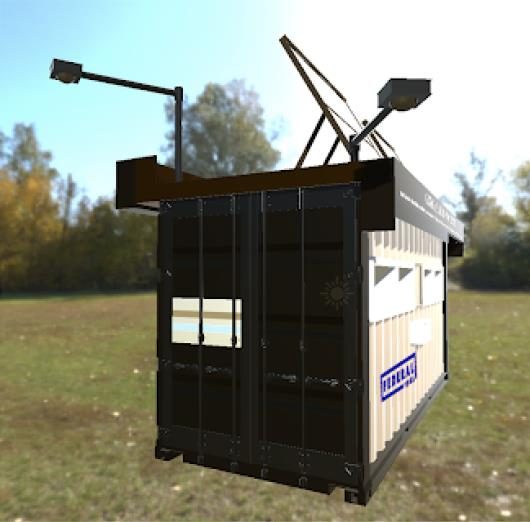
- GEF’s Neighborhood Donation Recycling Stations. Our solar-powered, camera-secured stations serve communities from Chico to Chula Vista. They are exactly the kind of independent, reuse-first collection point a centralized system could undercut.11
- Communities. When local operators disappear, so do local jobs, local giving and local accountability.
“Home town small businesses like ours fuel our communities, create local jobs, and build a stronger, more vibrant future from the ground up.” Chairwoman Charlene Nijmeh, Muwekma Ohlone Tribe of the San Francisco Bay11
Seven amendments. Opt-in for Tribes. Enforceable on the PRO.
The Tribe asks the Legislature to amend Chapter 20.5 of the Public Resources Code, either as a stand-alone bill or through clean-up or trailer language. Its draft is titled the Tribal Textile Stewardship Protection Act of 2026. In the memo’s words, the amendments “can be drafted to remain opt-in for Tribes (preserving sovereignty) while creating clear, enforceable duties on the PRO and CalRecycle.”1
- New §42984.28(a) · §42984.05(c)
Sovereignty and non-preemption
State explicitly that nothing in the chapter regulates, restricts or displaces the authority of a California Native American Tribe, or a Tribe-controlled or Tribe-chartered entity, to establish, operate or expand textile collection, reuse, repair or recycling programs as part of its governmental functions or land stewardship. The chapter shall not diminish Tribal sovereignty, and the PRO and CalRecycle “shall not displace or undermine” Tribal programs.
- The problem it solves
- The law is silent on Tribes, so Tribal programs could be absorbed into or regulated by a commercial system.
What it means for communitiesTribal stewardship programs keep running on the Tribe’s own terms.
- §42984.3 · new §42984.28(b)
Definitional protections
Amend “authorized collector,” “collection site” and related terms to expressly include programs run by Tribes or Tribe-controlled entities. Add definitions of “aboriginal territory,” “California Native American tribe” (PRC §21073), “Tribal government” and “Tribal textile program.” Clarify that a Tribal government is not a “producer” simply because it runs a Tribal textile program.
- The problem it solves
- Tribal programs have no defined place in the law today and could be misclassified.
What it means for communitiesTribes are recognized as partners in the system, not regulated as companies.
- §42984.6 · new §42984.28(c)
Non-displacement and inventory
Require the PRO’s needs assessment and plan to inventory existing Tribal collection and reuse programs and assess partnership opportunities. Prohibit exclusive collection territories, preferred-contractor arrangements or performance standards that displace an existing Tribal program without the Tribe’s free, prior and informed consent.
- The problem it solves
- A plan can’t protect programs it never counts, and exclusive deals can quietly erase them.
What it means for communitiesExisting local programs are counted first and can’t be pushed out by a contract.
- New §42984.29 · §§42984.7, 42984.10(d)–(e)
Right of first refusal in aboriginal territory
Before setting up or contracting for any new or expanded collection site or service in a Tribe’s aboriginal territory, the PRO must give written notice and offer the Tribe the first right to run it under contract. Terms must be no less favorable than those offered to other collectors. The Tribe gets 90 days (up to 180) to accept, decline or negotiate. If the Tribe declines, the PRO may not site competing free collection points that undercut an existing Tribal program without consent. Tribal volumes count fully toward the PRO’s convenience, density and performance standards, and Tribes may keep materials designated for cultural, educational, ceremonial or high-value reuse.
- The problem it solves
- The PRO otherwise decides alone where sites go and who runs them.
What it means for communitiesThe people who know the land get the first chance to serve it.
- New §42984.30 · §§42984.2, .4, .8, .19
Government-to-government consultation
Require CalRecycle and the PRO to consult with California Native American Tribes traditionally and culturally affiliated with affected areas, consistent with the meaningful-consultation principles of PRC §21080.3.1. Consultation would come before PRO approval, before plan approval or substantial amendment, before regulations are adopted, and before performance standards affecting collection infrastructure are set.
- The problem it solves
- The needs assessment must consult local governments, service providers and processors, but not Tribes.
What it means for communitiesTribes have a seat at the table before decisions are made, not after.
- §42984.8 · §42984.10
Plan content and approval conditions
Every plan must identify affected aboriginal territories, describe outreach to those Tribes, implement the right of first refusal, and document good-faith offers (or that no Tribe chose to participate). It must also describe support for participating Tribal programs. CalRecycle may not approve a plan that fails to substantially comply.
- The problem it solves
- Without an approval condition, Tribal protections would be optional.
What it means for communitiesThe protections are enforceable: a plan that doesn’t comply can’t be approved.
- New §42984.31 · §§42984.13–.14
Funding and capacity supports
Authorize and encourage the PRO to provide capacity-building grants, multi-year contracts, technical assistance and infrastructure support to Tribal programs. The Tribe would not have to become a fee-paying PRO member or subordinate its governmental authority. Tribal operators keep appropriate control over materials designated for cultural, educational or high-value reuse.
- The problem it solves
- All new program money flows through the PRO, and small and sovereign operators have no guaranteed share.
What it means for communitiesReuse dollars reach the programs doing the work on the ground.
Read the full memorandum and draft legislative text.Includes the Tribe’s proposed statutory language for each amendment, severability and short title. Final section numbering would be set by Legislative Counsel.
Download the memo (PDF)Additional protections GEF supports for independent collectors.
The Tribe’s seven amendments protect Tribal programs. The small, independent collectors who built textile reuse in California have no guaranteed place either. GEF supports these further changes. They are GEF’s proposals, separate from the Tribe’s requests.
No displacement of existing independent collectors
Extend the non-displacement idea to established small collectors and collection-box operators, so the PRO can’t create exclusive territories or undercut existing sites with free competing ones. The law already names “collection box operators.” §42984.3(ab)
Fair access to “authorized collector” status
Objective, published, non-discriminatory criteria for joining the network, with an appeal to CalRecycle when the PRO denies or terminates a collection site. §42984.7(a), (c)
Transparent compensation
Require the plan to publish the per-pound or per-site rates paid to authorized collectors and sorters. The law doesn’t require this today. §42984.17
A seat at the table
A guaranteed seat for small collectors on the PRO’s ex officio board or advisory committee, and a named role in the needs-assessment consultation. §§42984.4(a)(2)(A), 42984.6
Prioritize the community collectors the Legislature intended
Fix the cross-reference to a narrow sales-tax exemption that sunsets in 2029, and define the nonprofit and community collectors the law means to prioritize. §42984.3(p); RTC §6363.3
GEF will also comment at CalRecycle’s November 12, 2026 workshop and in the needs-assessment process due March 1, 2027.
Where things stand.
The plan that will govern every collection bin in California is being designed now, years before it takes effect.
- Sept 28, 2024
SB 707 signed
Chapter 864, Statutes of 2024. Effective January 1, 2025.
- Feb 27, 2026
One PRO approved
CalRecycle approves Landbell USA as the sole producer responsibility organization.5
- July 1, 2026
Producers must join
Every covered brand must join the PRO.4
- Aug 12, 2026
The Tribe speaks
The Muwekma Ohlone Tribe sends its memorandum and draft amendments to the Senate Committee on Environmental Quality.1
- Nov 12, 2026
CalRecycle workshop
Public workshop on regulatory concepts for the PRO plan, contingency plan and annual reports (Sacramento and Zoom).4
- Mar 1, 2027
Needs assessment due
The PRO’s statewide needs assessment, which decides what gets counted. §42984.6
- July 1, 2028
Regulations
CalRecycle’s regulations take effect, no earlier than this date. §42984.2
- 2030–2031
Plan approved and in force
A plan must be approved by July 1, 2030, then fully implemented within 12 months. §§42984.8, 42984.9
- After 2035
A second PRO?
The earliest date a second PRO could be approved. §42984.4(a)(4)
Help amend SB 707.
The Muwekma Ohlone Tribe of the San Francisco Bay asks Californians to make sure lawmakers hear from the communities this law affects before the rules are set.
Contact your legislator
The Tribe asks you to find your state Senator and Assemblymember and urge them to support its amendments to SB 707.
Find your representativesSign on as an organization
Collectors, thrift operators, Tribes, nonprofits and community groups can add their names in support.
Add your organizationThis call to action is sponsored by the Muwekma Ohlone Tribe of the San Francisco Bay. Green Education Foundation is a 501(c)(3) public charity, and this page is provided for public education.
Frequently asked.
Does GEF oppose SB 707?
No. The Tribe and GEF support the law’s goals: more reuse, more repair, less waste. We are asking for targeted amendments so the system it creates doesn’t push out the Tribal and small community operators who already do this work.
What is a PRO?
A producer responsibility organization is the nonprofit that producers must join to run the program. Under SB 707 there is only one, Landbell USA, approved February 27, 2026. It writes the statewide plan, contracts with collectors and distributes producer fees.5
Can a small collector still operate after SB 707?
The law doesn’t ban independent collection. But program status, free containers and hauling, and program funding go only to “authorized” collectors under contract with the PRO §§42984.3(b), 42984.10(e). Independent operators would compete against a free, fee-funded network.
Why does this matter to Tribes specifically?
Tribal governments are sovereign, and many run textile programs as part of land stewardship. SB 707 never mentions Tribes. It gives local governments, but not Tribes, a guaranteed right to join the collection network §§42984.7(b), 42984.3(m).
Would the amendments force Tribes to participate?
No. As the Tribe’s memo puts it, the amendments are designed to “remain opt-in for Tribes (preserving sovereignty) while creating clear, enforceable duties on the PRO and CalRecycle.”1
Which Tribes would be covered?
Tribes that meet the definition of “California Native American tribe” in Public Resources Code §21073: those on the Native American Heritage Commission’s contact list. That includes both federally recognized and non-federally recognized Tribes.10
Is there still time to fix this?
Yes. CalRecycle’s regulations can’t take effect before July 1, 2028, and the PRO’s plan isn’t due for approval until 2030. Now is when the structure is being set.
Where can I read the law?
The full text is on the California Legislature’s website: SB 707, Chapter 864, Statutes of 2024.