
When disaster strikes, warmth can’t wait.
Every winter, fires, floods and storms push families out of their homes with only what they’re wearing. Green Education Foundation already moves about 60 million pounds of clothing and textiles a year across California, Texas and several Mid-Atlantic states.1 We want that network to deliver coats, clothes and blankets to people who need them most.
A wildfire takes a neighborhood overnight. A hurricane floods a town. An earthquake leaves families in tents in the cold. In those first days, people need the simplest things: a dry change of clothes, a warm coat, a blanket for the night.
A truckload of help for Adıyaman.
On February 6, 2023, a magnitude 7.8 earthquake and a magnitude 7.5 aftershock struck southern Türkiye near the Syrian border.3 The quakes caused heavy damage in the city of Adıyaman.4
Weeks later, the Muwekma Ohlone Tribe of the San Francisco Bay Area stepped in. Tribe members raised money for a truckload of aid, and Tribal Chairwoman Charlene Nijmeh, GEF’s founder, accompanied it to Adıyaman.4 Outside the Adıyaman Chamber of Commerce and Industry, she handed out packages of clothing and dry food to dozens of earthquake survivors. Afterward she visited survivors living in tents across the city.4
Nijmeh described the mission as delivering clothing, blankets and relief supplies directly to the people affected.6
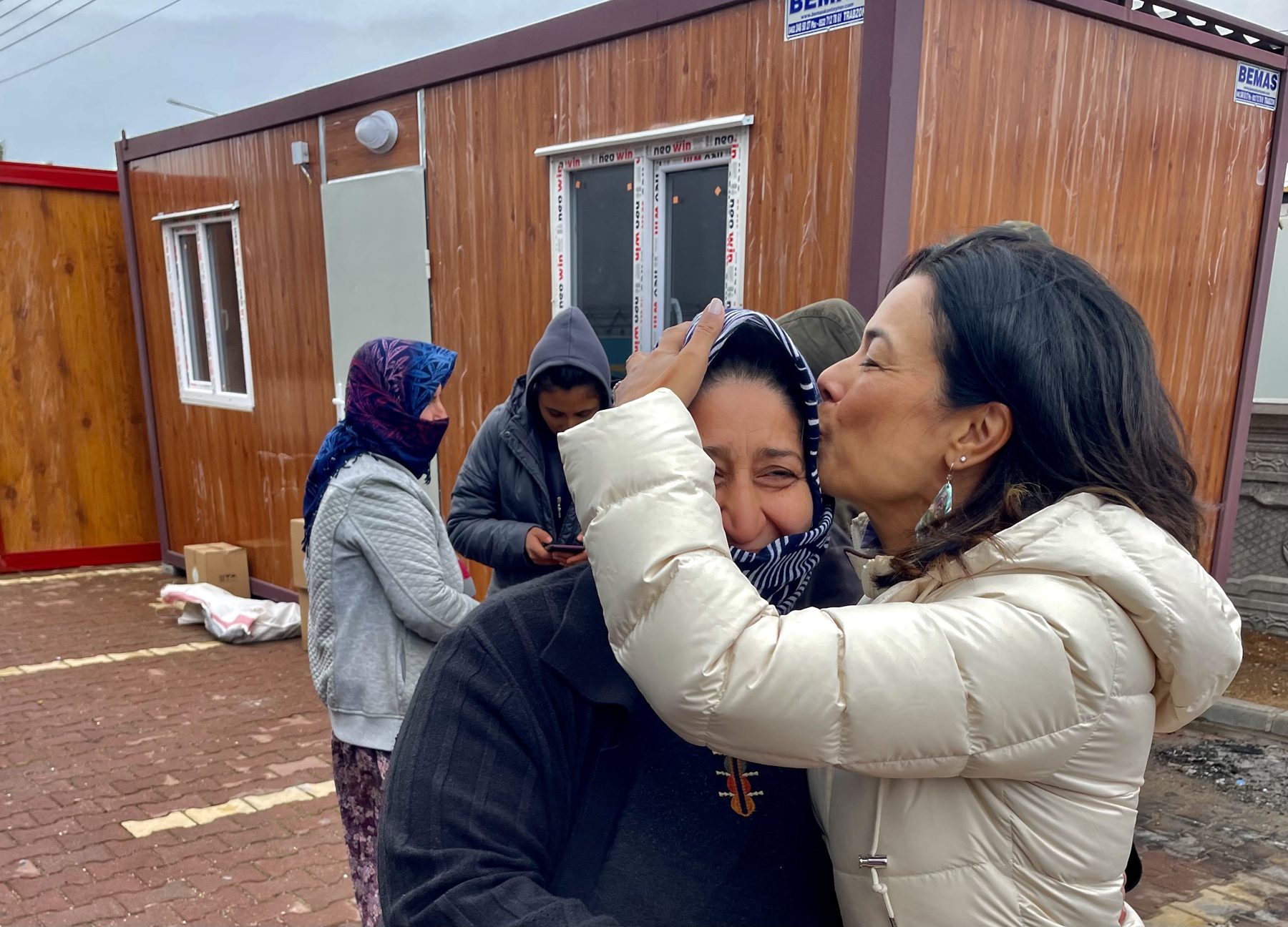
As Green Education Foundation and the Muwekma Ohlone Tribe, we are doing our part to help the Turkish people get through this crisis, and we encourage the whole global community to come together to ease it.Charlene Nijmeh, quoted by VOA Türkçe, March 2023 (translated from Turkish)4
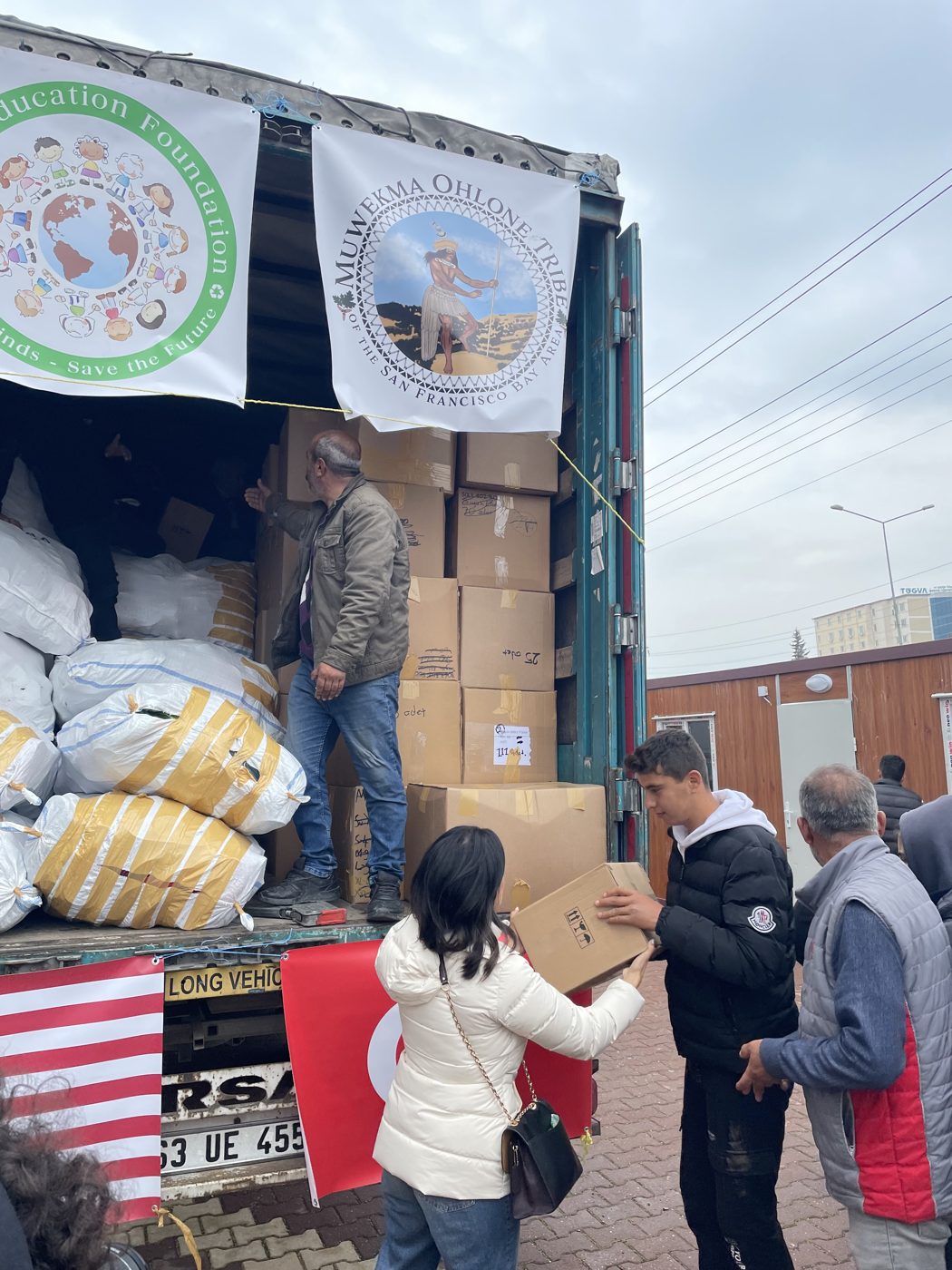
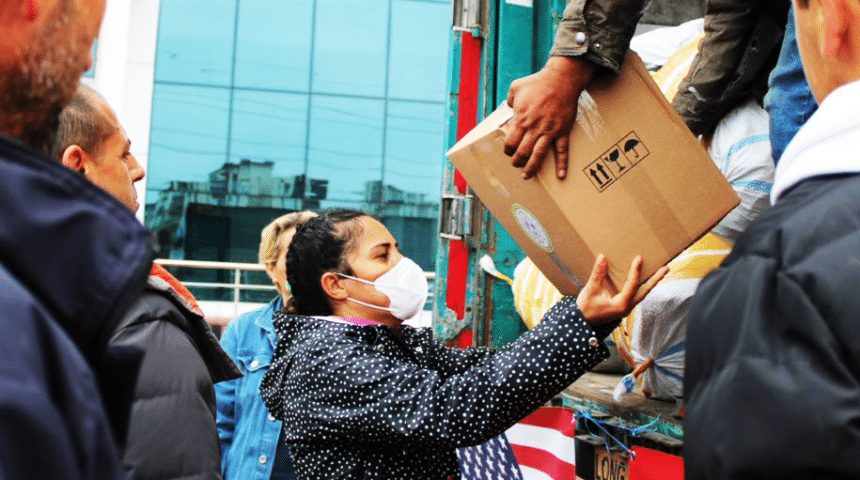
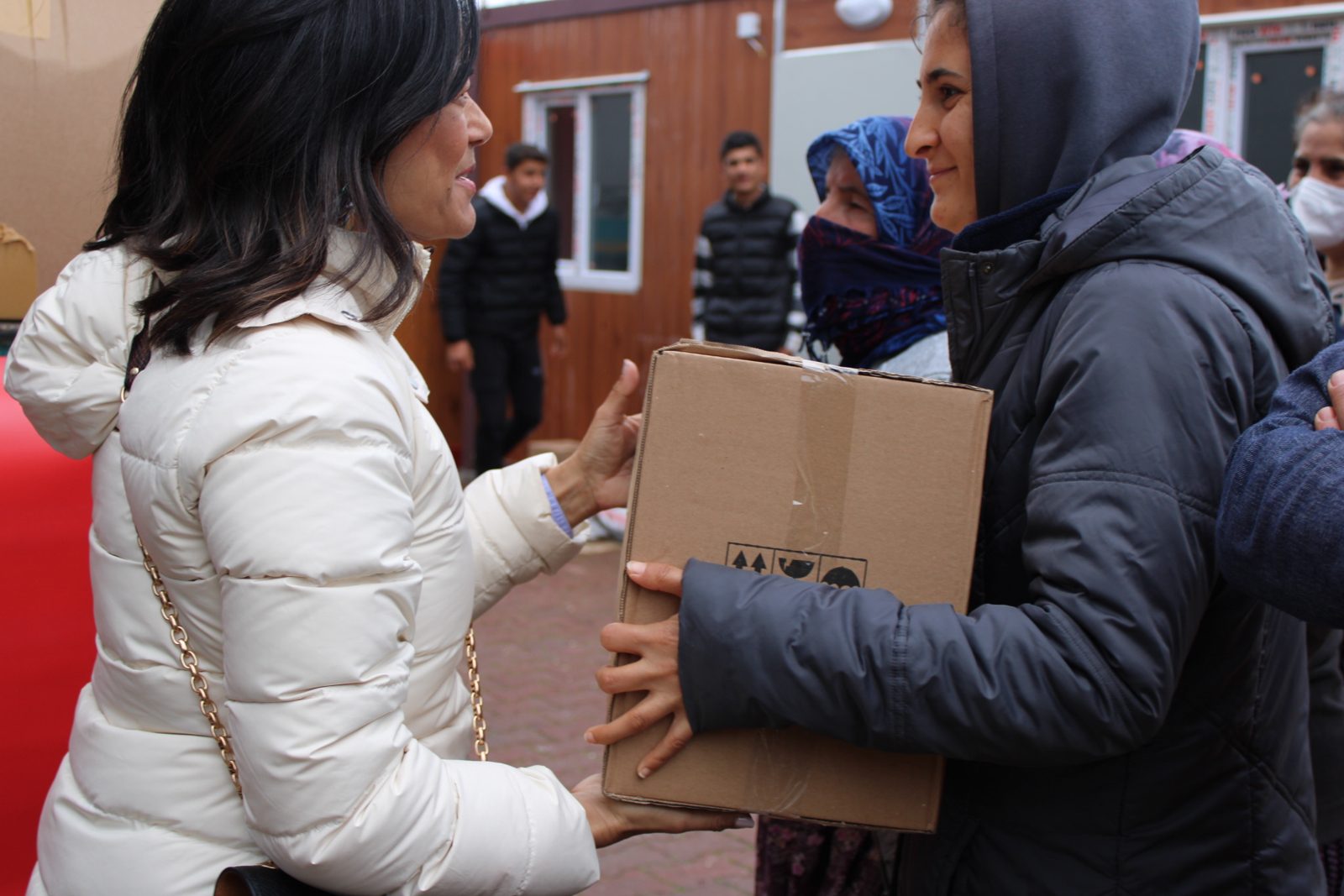
- What reached Adıyaman: one truckload of clothing and dry food, paid for by donations from Tribe members.4
- Who helped on the ground: Gani Bereket, Assembly President of the Adıyaman Chamber of Commerce and Industry, joined the distribution and called on international donors to help the city recover.4
- Not the first time: GEF reports that it earlier sent about 300,000 pounds of clothing, jackets, blankets and supplies for relief in Ukraine.7
- What came next: Nijmeh said she would raise aid for other earthquake regions after returning home.4
From donation station to disaster zone.
Türkiye showed what a determined team can do. GEF aims to turn its everyday recycling network into a standing relief pipeline, so warm clothing is ready before the next disaster.
Every day, GEF stations collect coats, sweaters and blankets that people no longer need. Today most of it is reused, repurposed or recycled.2 GEF aims to set aside the warmest, most usable pieces for people in crisis.
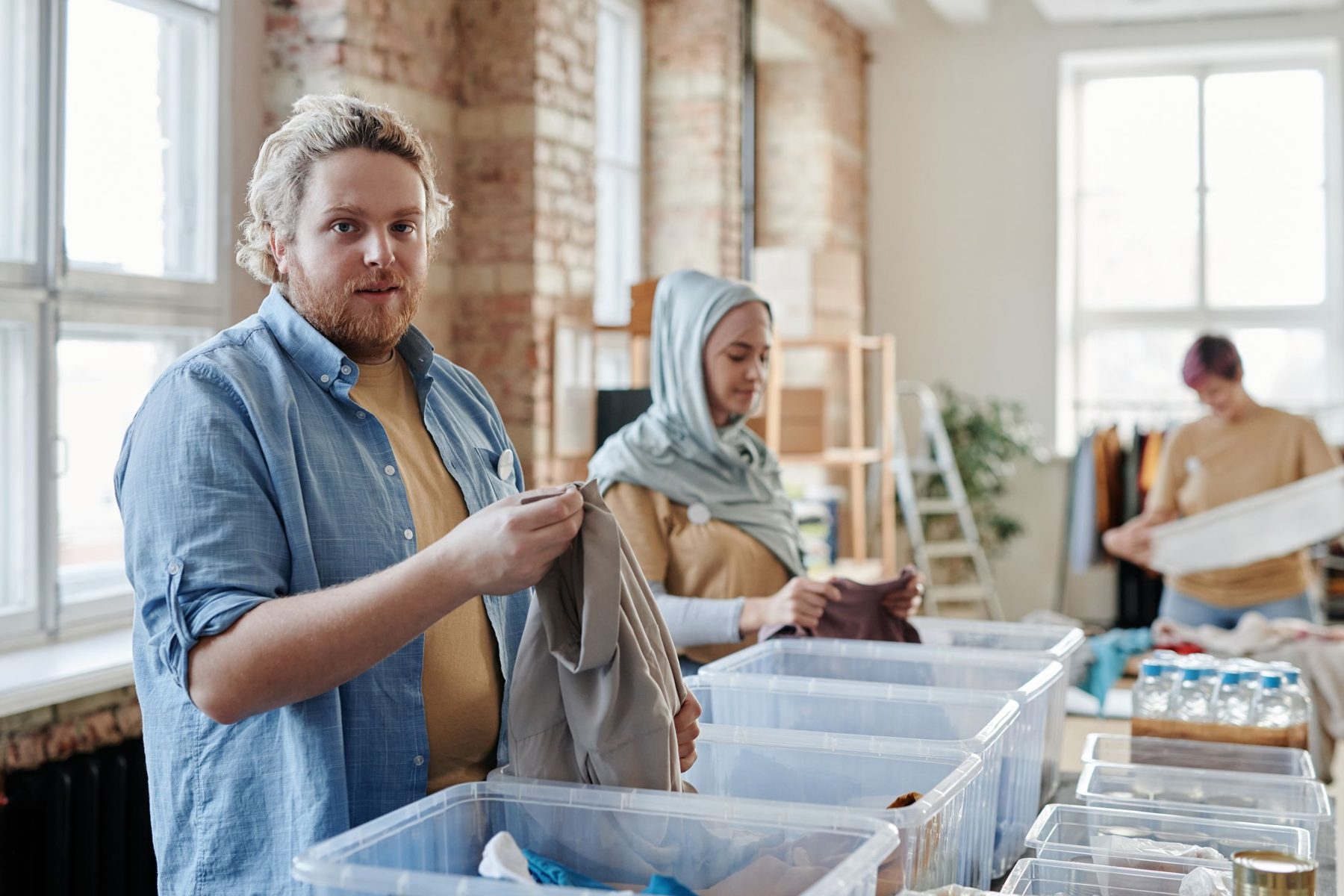
Collect
Donation stations take in clothing and blankets every day.2
Sort for warmth
GEF aims to pull warm, usable coats, jackets, clothing and blankets from the sorting line.
Stage
Packed bundles and pallets would be held in ready inventory.
Ship
When disaster strikes, GEF aims to ship to affected communities at home and abroad.
Deliver with partners
GEF would work with local relief groups, Tribes and agencies so help reaches the people who need it.
Where this help could go:
- Wildfires
- Hurricanes & floods
- Winter storms
- Earthquakes
- Refugees & displaced families
Put warmth on the next truck.
Your gift to the GEF Disaster Relief Fund helps sort, pack, stage and ship warm clothing and blankets to people displaced by disaster.
These are example levels showing the kind of work gifts like yours help make possible.
Give to the Relief Fund
$50 one time helps sort, clean and pack a bundle of coats, warm clothing and a blanket for one family.
Designated for the GEF Disaster Relief Fund.
Please enter an amount of at least $1.
You’ll complete your gift securely on PayPal. Monthly gifts can be cancelled any time. Green Education Foundation is a 501(c)(3) public charity (EIN 45-2552544); gifts are tax-deductible to the extent allowed by law.
Sponsor a mission.
Some of the biggest help comes from companies, foundations and logistics partners. Here’s how you can partner with us.
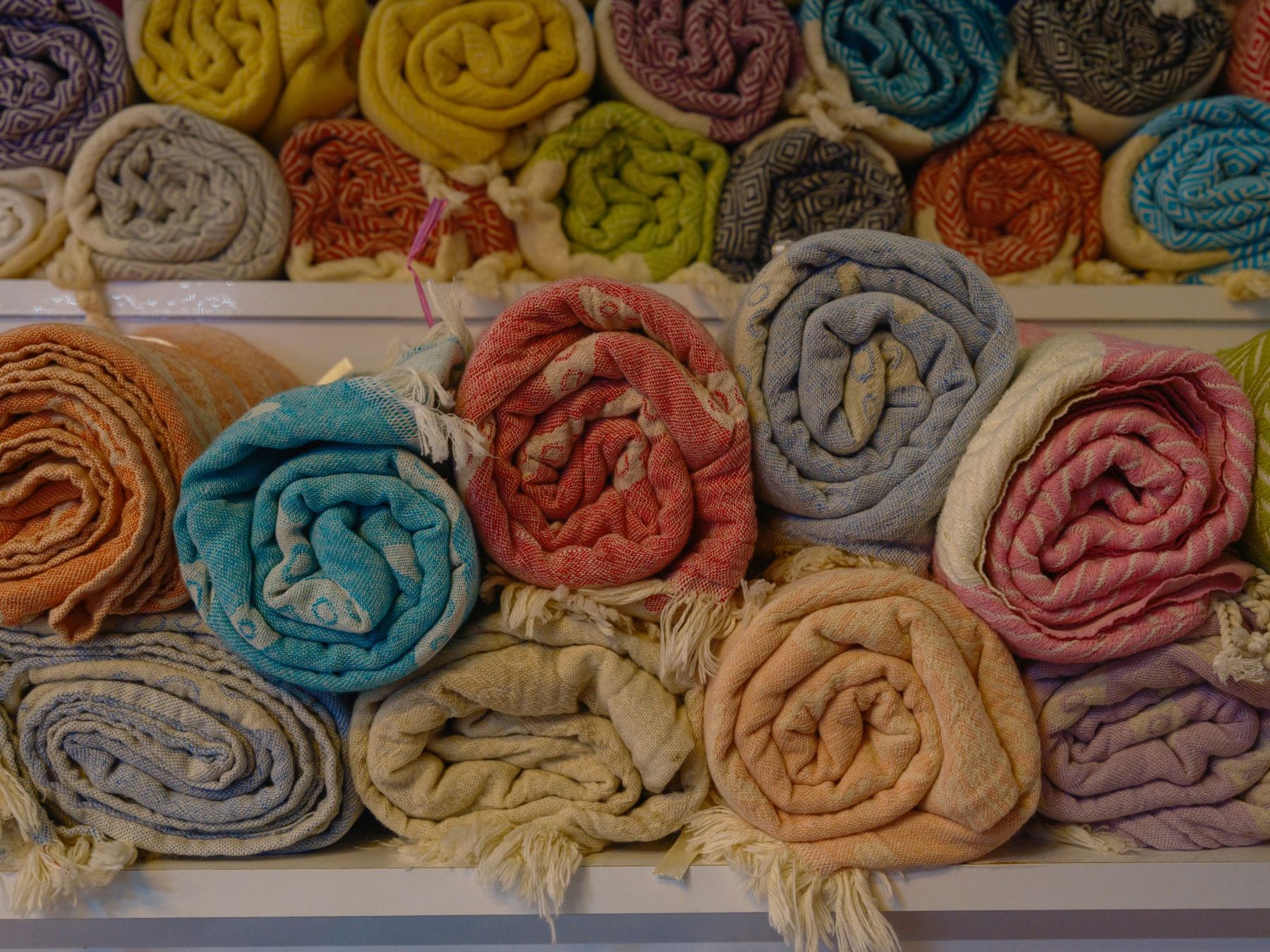
Sponsor a full mission
Fund a complete relief mission, from sorting and packing to freight and delivery, with your organization recognized as sponsor.
Become a relief partner
Multi-year grants, employee giving and gift matching help GEF build ready inventory before disaster strikes.
Donate logistics
Trucking, warehouse space, pallets, freight forwarding or air cargo can move warm clothing to where it’s needed.
Hold a coat drive
Schools, congregations and offices can collect coats and blankets for the relief pipeline. Drop them at a GEF station or ask us about pickup.
Talk to us about sponsoring a mission.
Tell us what your organization would like to support. We’ll follow up to plan a sponsorship that fits.
Frequently asked.
Is my gift tax-deductible?
Yes. Green Education Foundation is a 501(c)(3) public charity (EIN 45-2552544), so gifts are tax-deductible to the extent allowed by law. PayPal emails you a receipt right away. Gifts made on this page are designated for GEF’s Disaster Relief Fund and used for relief work.
Where do donated clothes go?
Clothes left at a GEF donation station go into our closed-loop system. Wearable items are reused. Items that can’t be worn again are repurposed into products like cloth rags, and leftover fabric is recycled into fiber for things like insulation and carpet underlay.2 GEF aims to set aside warm, usable coats, clothing and blankets for people affected by disasters as the relief program grows.
Can I hold a coat drive?
Yes, and we’d love to help. Schools, congregations, offices and neighborhood groups can collect coats, warm clothing and blankets, then drop them at a GEF donation station or arrange a pickup. Email outreach@recyclingedu.com to plan yours.
Can my company sponsor a mission?
Yes. Companies and foundations can underwrite a mission, match employee gifts or donate logistics such as trucking, warehousing or freight. Talk to us about sponsoring a mission.