
Seed minds. Save the future.
We reach children between 7 and 16, the years when a worldview takes root,1 and give them the awareness, habits and hope to protect what sustains us all.
Our children are hearing mixed messages.
They are told to consume less, then surrounded by marketing that teaches them to consume more. They hear contradictory positions from parents, peers, educators and leaders, and too often they withdraw from having any position of their own.2
Schools want to help, but budget cuts make it hard to add anything to the curriculum, and green education is not a priority in most schools.2
So Charlene Nijmeh and former leaders of the Muwekma Ohlone Tribe founded GEF with one clear charge:3 to “seed minds and save the future” by reaching children ages 7 to 16, the formative years when worldviews take root.1 If a child understands that the problem is real, a young mind will “grow, think, and create” solutions we cannot yet imagine.2
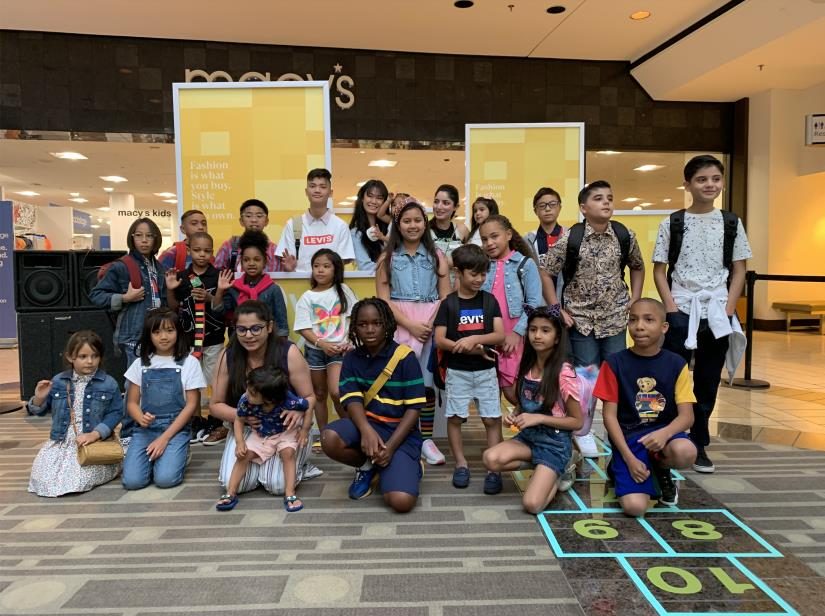
Our mission is to help our children know enough and care enough to be looking.Green Education FoundationFrom our founding statement2
Three promises, one closed loop.
Educate
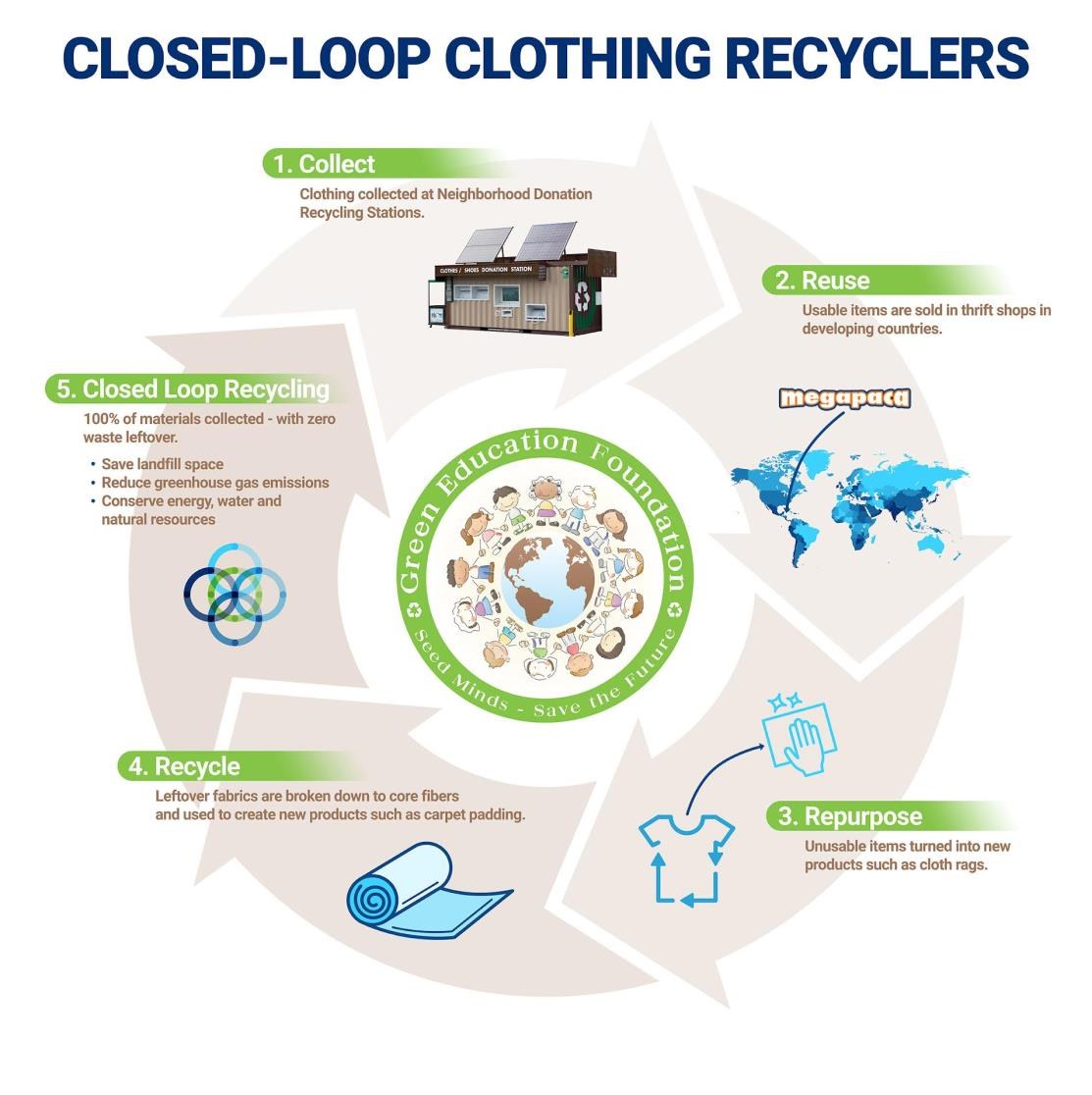
Ecology curricula, hands-on workshops and open-source lesson plans that bring sustainability into the classroom and teach young people how their behaviors affect the planet.4
Our curriculum →Make recycling easy
Solar-powered, camera-secured donation stations built from recycled shipping containers, open 24/7 in communities across California, Texas and several Mid-Atlantic states.4
How the stations work →Give back
Proceeds fund green programs in schools,1 and community events like backpack exchanges have given thousands of free backpacks with school supplies to underprivileged communities.4
For educators →Profit with purpose.
What can't be resold in our network of reuse stores in Latin America is reprocessed into fiber for building insulation and carpet underlay, so that as few items as possible ever see a landfill.4
With our partners, we have created more than 6,000 jobs in Central America,4 feeding micro-enterprises that lift families from poverty and supply affordable textiles.4 It is the environmental justice the Tribe set out to build: healing both the Earth and its most marginalized communities.1
The problem we're raising them to solve.
of textiles is landfilled or burned every second, worldwide.5
of U.S. textiles were recycled in 2018. 11.3 million tons went to landfill.6
of the world's textile fibre comes from recycling old textiles into new ones.7
of textile waste generated in California every year; only 423 million pounds are diverted.4
We are building a movement.
Statewide, California needs to scale its collection system while changing behavioral norms. Unlike other collectors, GEF is focused on winning hearts and minds, because that is what changes behavior.4
That's why the stations and the classrooms belong together. A child who learns why reuse matters, then watches her family fill a bag for the station down the street, carries that lesson for life.
“We do not have the luxury anymore of hoping things will get better… We must stop talking and start acting like we care about our children and whether they have clean air to breathe, clean water to drink, and a healthy planet to live on.” — Charlene Nijmeh8
Help a child see the problem, and the way out.
Your gift funds green programs for students in the communities our stations serve.